Signal 01
RAG is no longer a background detail
Ingestion queues, vector search, refresh logic, permissions, and quality metrics start affecting the product experience.
AI Platform Engineering
ToolLeap helps AI teams turn working prototypes into production and enterprise-grade platforms: RAG, agent tools, customer-owned code, CI runners, Kubernetes, GPU inference, observability, and private deployments.
When it matters
Infrastructure becomes strategic when AI workloads start affecting margin, reliability, security, enterprise sales, or customer-owned execution.
Signal 01
Ingestion queues, vector search, refresh logic, permissions, and quality metrics start affecting the product experience.
Signal 02
Actions require secrets, audit logs, limits, retries, approvals, and a runtime that does not expose the rest of the platform.
Signal 03
Private deployments, data residency, dedicated runners, and local inference become part of the sales motion.
What we build
Queues, workers, vector databases, ingestion observability, permissions, refresh paths, and quality metrics.
Explore RAG productionizationSecrets, approvals, audit trails, limits, retries, network boundaries, and safe execution paths for actions.
Runner pools, customer-owned code, build minutes, registry flows, sandboxing, and private network access.
Cluster design, GitOps, environment isolation, observability, SLOs, policy controls, and data residency.
Routing between external APIs and local models with cost, latency, privacy, fallback, and GPU observability in mind.
Tenant margin, model spend, queue health, latency, error budgets, auditability, and platform dashboards.
Proof point
WebTerm is a small public example of the patterns behind agent tools and customer-owned code: browser-native execution, session boundaries, auditability, and operational cleanup.
Open WebTerm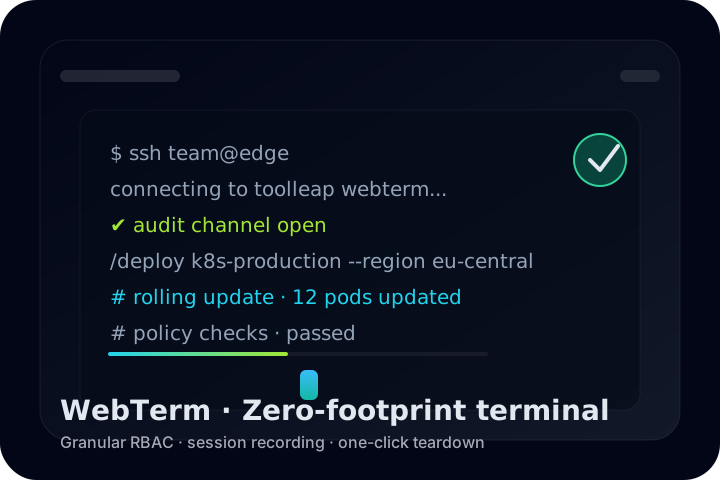
Engagement model
We review architecture, workloads, data flow, operational pain, security gaps, and business triggers.
We sequence what to keep managed, what to build, what to isolate, and what to defer until the business needs it.
We implement the runtime, pipeline, runner pool, Kubernetes layer, observability, or deployment path with your team.
We leave dashboards, playbooks, ownership boundaries, and follow-up improvements for the next growth stage.
Next step
In ten business days, ToolLeap maps risks, cost drivers, security gaps, architecture options, and the build sequence.