Signal 01
RAG works in demo, but not reliably
Ingestion, permissions, freshness, evaluation, and quality drift are fragile enough to slow product and customer teams.

AI Infrastructure Audit
Find the reliability, cost, security, and platform gaps blocking your RAG, agent tools, LLM deployment, Kubernetes, observability, and enterprise AI roadmap.
Who this is for
This AI readiness assessment fits teams that already have a working LLM product, a RAG or agent prototype, or enterprise pressure that makes infrastructure decisions urgent.
Signal 01
Ingestion, permissions, freshness, evaluation, and quality drift are fragile enough to slow product and customer teams.
Signal 02
Tools now need secrets, approvals, audit logs, limits, retries, network boundaries, and tenant-aware isolation.
Signal 03
Provider bills are growing without request-level attribution, routing policy, fallback strategy, or margin dashboards.
Signal 04
Data residency, private LLM deployment, RBAC, auditability, and security evidence are becoming part of the sales process.
Signal 05
Kubernetes, CI runners, queues, workers, observability, and deployment paths have grown without one platform owner model.
Audit scope
ToolLeap reviews the AI infrastructure architecture, operating model, and risk surface behind production LLM infrastructure.
Service boundaries, tenancy, API flows, deployment environments, ownership boundaries, and the AI infrastructure stack behind the product.
Ingestion, refresh logic, vector database operations, permissions, evaluation, data freshness, and RAG infrastructure failure modes.
Tool registry, secrets, approvals, sandboxing, audit logs, retries, rate limits, and isolation for AI agent infrastructure.
Provider strategy, private or hybrid deployment, fallbacks, latency, quality, cost tradeoffs, and private LLM deployment readiness.
Infrastructure as code, environments, runners, worker queues, release paths, runbooks, and Kubernetes cost optimization opportunities.
Traces, evals, token costs, request attribution, SLOs, dashboards, LLM observability, and tenant-level margin signals.
RBAC, data residency, network boundaries, secrets, compliance evidence, auditability, and AI security assessment gaps.
Engagement process
The engagement connects AI readiness audit findings to business impact, delivery effort, dependencies, and a 30/60/90-day AI implementation roadmap.
We review ICP, product stage, current architecture, enterprise requirements, production risks, and the business reason for the audit.
We review repositories, diagrams, cloud or Kubernetes setup, observability, deployment flow, data paths, and platform ownership.
We score reliability, cost, security, RAG, agents, inference, data, and operations against production AI requirements.
We rank fixes by business impact, risk, delivery effort, dependency order, and the shortest path to measurable improvement.
You receive the maturity scorecard, architecture map, risk register, cost drivers, and 30/60/90-day roadmap.
Deliverables
A clear maturity assessment across reliability, cost, security, data, operations, and enterprise readiness.
A practical view of systems, workloads, tenancy, data flows, model calls, environments, and operational ownership.
Prioritized risks across RAG, agents, LLM deployment, Kubernetes, observability, security, and platform operations.
The LLM, queue, compute, routing, and operational patterns most likely to affect margin or uptime.
Data residency, audit logs, secrets, RBAC, isolation, private deployment, and compliance evidence gaps.
A sequenced AI readiness roadmap with fixes, dependencies, owners, and optional build paths.
Why ToolLeap
ToolLeap works at the infrastructure layer behind LLM products: RAG pipelines, agent tools, controlled execution, Kubernetes operations, observability, private deployment, and enterprise controls.
Related service paths
Use the audit to choose the smallest useful build path instead of funding another broad AI consulting workstream.
Foundation
Build the platform layer behind reliable RAG, agents, runners, Kubernetes, inference, and enterprise controls.
Follow-up path
Turn ingestion, permissions, freshness, evaluation, and vector operations into a production-ready capability.
Follow-up path
Design tool runtimes, approvals, limits, secrets, audit trails, and isolated execution for product agents.
Follow-up path
Assess hybrid inference, local models, GPU operations, data residency, and enterprise deployment paths.
Proof point
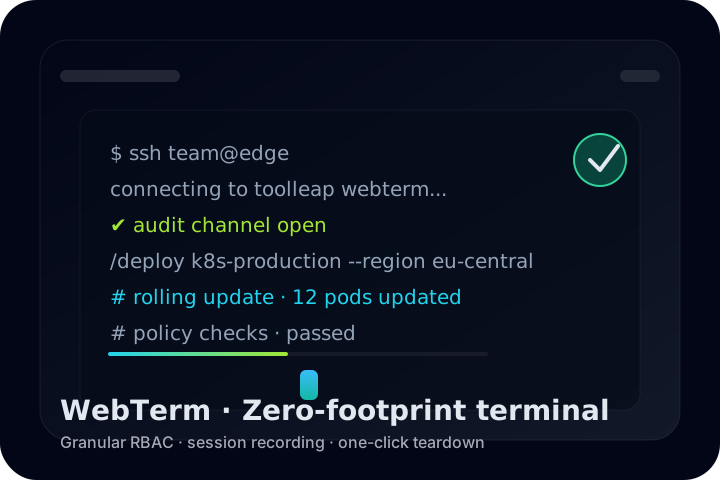
Use controlled browser-based execution patterns for developer workflows, customer tools, and agent actions.
FAQ
A generic AI readiness assessment often checks organization, use cases, and adoption plans. ToolLeap focuses on the technical infrastructure behind LLM products: RAG, agents, inference, Kubernetes, observability, cost, security, and enterprise controls.
The standard engagement is designed for ten business days after intake materials are available. Larger platforms or regulated environments can add scope, but the default outcome is still a focused roadmap.
The best group is usually a product engineering lead, platform or DevOps owner, security contact, and someone who understands customer or enterprise requirements.
No. The audit can review managed LLM APIs, serverless workloads, early Kubernetes usage, or hybrid designs. We only recommend private or self-hosted deployment when the product and buyer requirements justify it.
Yes. That is often the right time to review ingestion, permissions, tool execution, evaluation, cost attribution, and operational guardrails before fragile decisions become harder to change.
Useful artifacts include architecture diagrams, repository structure, deployment notes, cloud or Kubernetes setup, observability dashboards, LLM usage reports, data flow notes, and known production or sales risks.
Yes. The audit covers practical AI security assessment areas such as RBAC, secrets, tenant isolation, data residency, audit logs, network boundaries, and evidence needed for enterprise conversations.
You can use the report with your internal team, ask ToolLeap to help design a specific architecture, or turn one roadmap item into targeted platform work such as RAG productionization, agent infrastructure, private LLM deployment, or observability.
Next step
In ten business days, ToolLeap maps maturity, architecture gaps, cost drivers, security risks, and the next platform build sequence.